Virtual staging.
Before meets after.
Compare one original living room before and after AI virtual staging in eight furniture styles.
Drag the slider and see the possibilities.
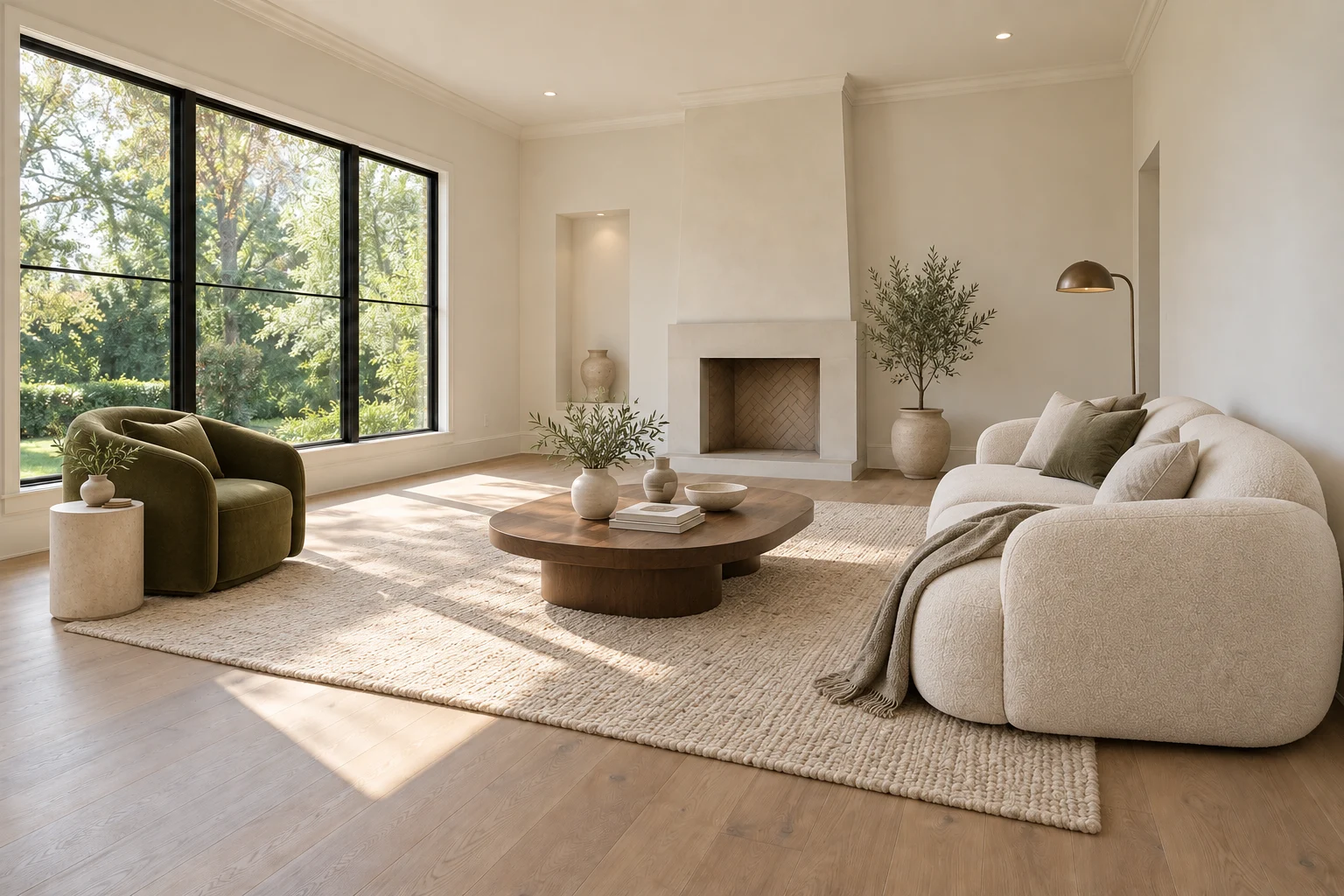
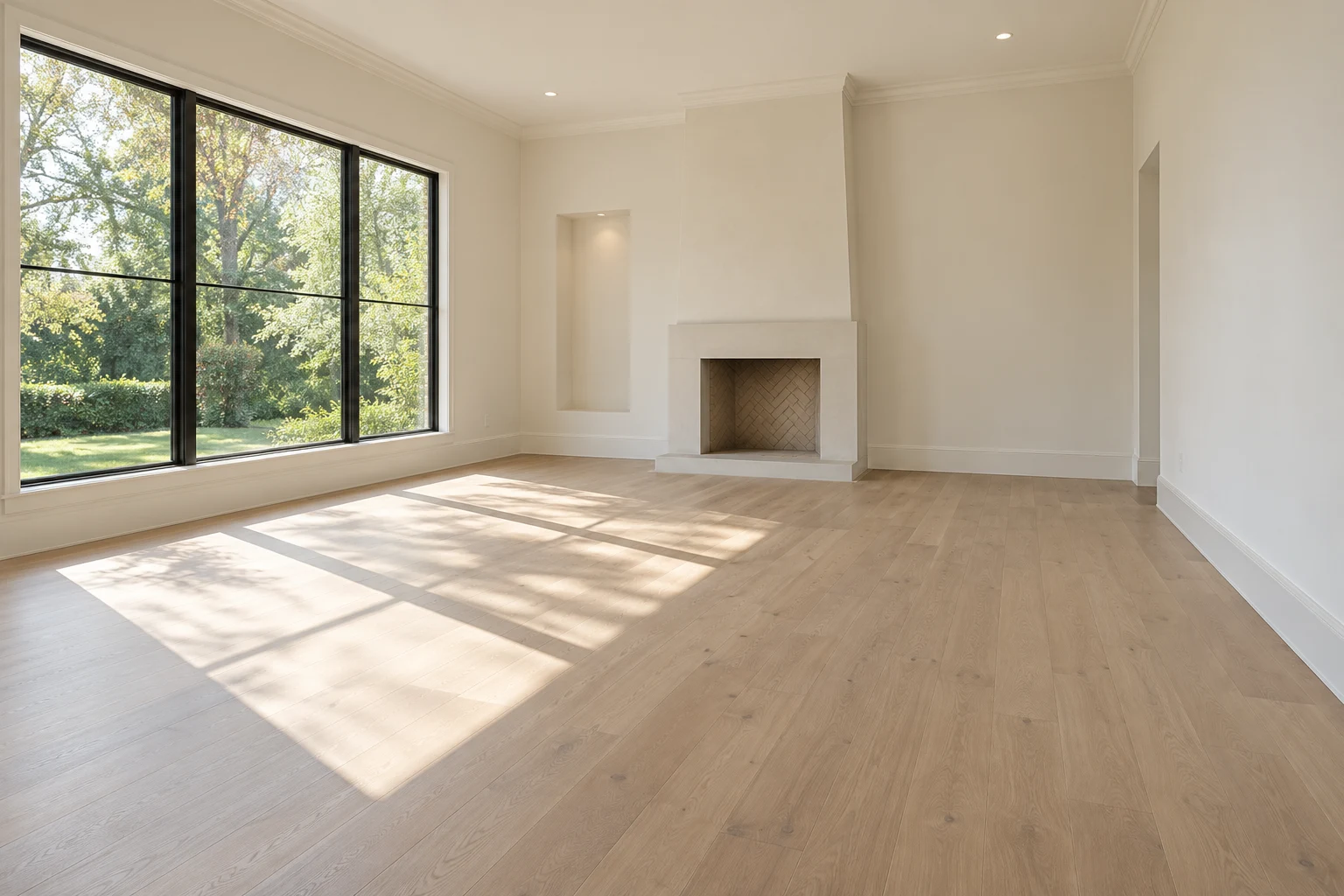 BeforeAfter
AI-created demonstration images. Always review the original architecture and include a virtual staging disclosure with your listing.
What changes with each furniture style?
A style changes the movable furnishings, not the property you are advertising. Use these eight directions to choose furniture shapes, textiles and accents, then compare the doors, windows, fireplace and floor with the original. These are style illustrations, not measured furniture layouts.
Modern virtual staging
Choose clean furniture lines, neutral upholstery and wood accents when the room already has a strong architectural feature. Keep the seating group low enough to read the windows and fireplace clearly; check that a rug does not disguise a change in floor material.
Scandinavian virtual staging
Light wood, natural textiles and restrained furnishings suit a calm, welcoming presentation. Look for enough separation between pale furniture and pale walls to make the room readable. The style should not brighten away the actual wall colour or replace the floor.
Coastal virtual staging
Use linen, light wood and soft blue accents to suggest a relaxed space. The coastal direction comes from furnishings: it should never invent an ocean view, enlarge a window or change landscaping visible outside. Review the glass and outdoor scene closely.
Luxury virtual staging
Refined upholstery, stone-look furniture and subtle metallic details can create a formal setting. Keep furniture proportional to the photograph. Luxury styling is not permission to add marble flooring, a new fireplace or architectural mouldings that the property does not have.
Contemporary virtual staging
Soft curves and layered neutral textures create a current furnishing concept. Check curved chairs and tables at full size, especially their legs and contact shadows. Keep the original circulation routes visible instead of filling every open corner with an accent piece.
Minimalist virtual staging
A few carefully placed pieces can explain the room without overwhelming it. Empty space is part of the arrangement. Look for a clear route through the room and enough exposed floor to compare its finish and perspective against the original photo.
Traditional virtual staging
Classic wood silhouettes and balanced seating can make a formal room feel familiar. Check the scale of substantial chairs and cabinets around doors. Patterns and decorative artwork belong on movable objects; they should not introduce wallpaper or alter built-in details.
Industrial virtual staging
Dark metal and warm wood can suggest an urban furnishing style without changing the building. Inspect shelves, table legs and metal frames for believable intersections. Reject a result that adds exposed brick, pipes or concrete surfaces absent from the original.
See documented generation tests
Our case studies show a bedroom, a kitchen and a living room, with source images, recorded generation times and visual review notes. Explore an actual sofa-colour edit and eight extracted furniture layers, then see what needs a closer check before publishing.
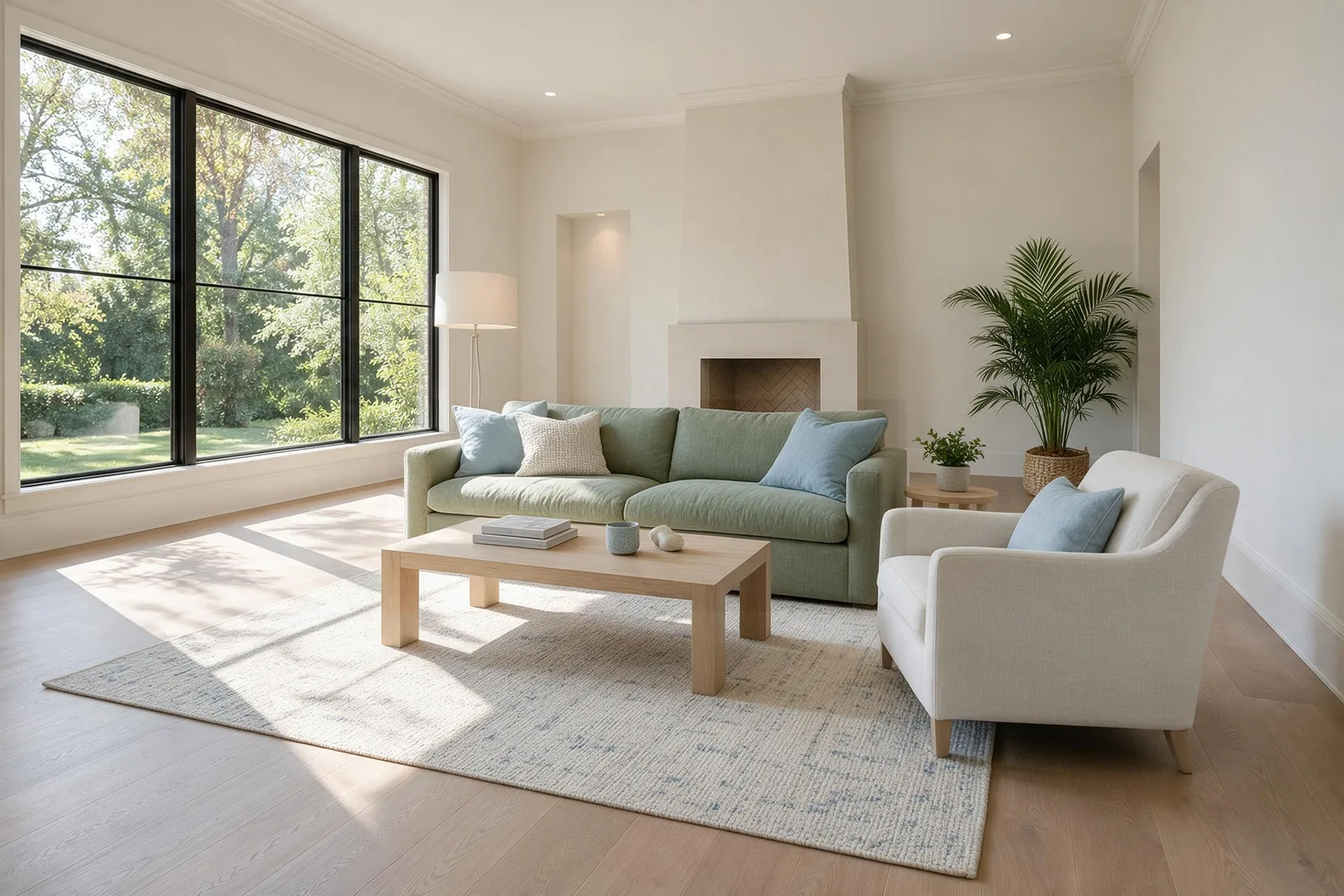
One sofa. A different colour.
See the selected-region edit, the original result and a measured 49.63-second turnaround in this test.
See the furniture edit
Furniture, separated.
Explore the reconstructed background and eight actual object layers, including furniture, plants and a rug.
Explore the furniture layersNow imagine your next listing.
Read the living room staging guide for furniture placement and review tips.
Stage a property